
If there's one question we hear more than any other on our tours, it's this one: "Are we going to see a bear today?" Honestly, we love that question. Spotting a grizzly digging for roots in a meadow or a black bear cub scrambling up a tree is the kind of moment people talk about for years.
Here in West Yellowstone and Big Sky, we spend just about every day of the season running Montana Yellowstone tours and scanning hillsides, tree lines, and river bottoms for bears. We can't promise you'll see one, because these are wild animals and they keep their own schedules. But after countless hours behind the wheel and behind a pair of binoculars, we've picked up a few tricks that seriously improve your odds. Here's what we tell our guests.
Know Which Bears You're Looking For
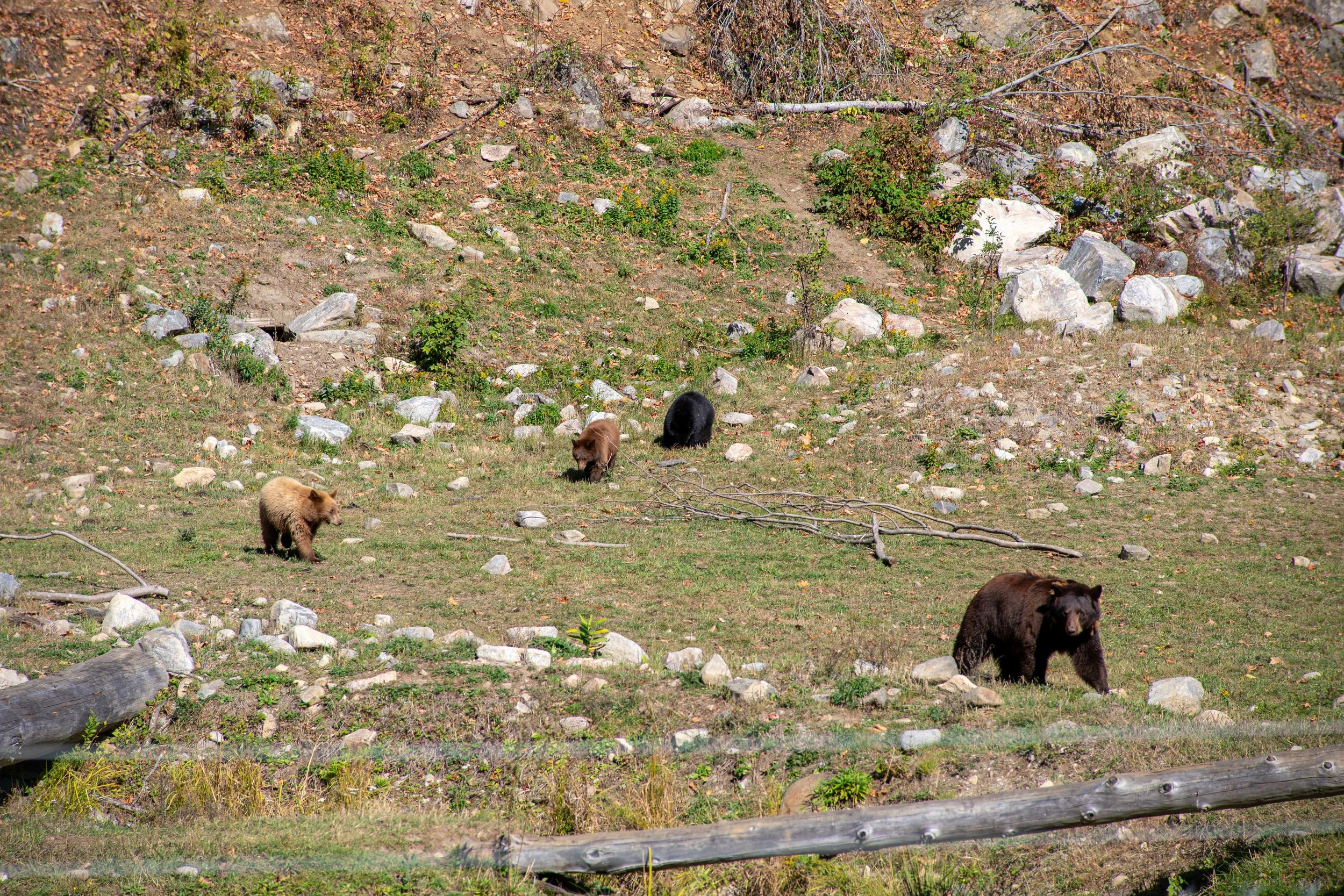
Yellowstone is home to both grizzly bears and black bears, and telling them apart is half the fun. Here's the thing that trips up almost everyone: color doesn't help much. Black bears can be black, brown, cinnamon, or even blond. Grizzlies can be dark brown or so pale they look almost silver.
Instead, look at the shape. Grizzlies have a big muscular hump on their shoulders, a slightly dished face, and short rounded ears. Black bears have no hump, a straighter "Roman nose" profile, and taller, more pointed ears. Once you know what to look for, you'll start calling them out like a pro. We've had kids on our Yellowstone tours for families correct their parents by lunchtime, which is always a highlight.
Timing Is Everything
We always tell visitors that an early start is the best start, and that goes double for bears. Bears are most active in the early morning and again in the evening, when it's cooler and the park is quieter. By midday, many of them have bedded down in the shade where you'd never spot them.
The time of year matters too. Spring is our favorite season for bears. They're coming out of hibernation hungry, and the lower valleys green up first, so bears spend a lot of time out in the open grazing on fresh grass and looking for winter-killed elk and bison. In summer, many bears move up into higher elevations, though they still pop up along the roads. Fall brings another good window as bears feed like crazy before winter.

Where to Look for Bears in Yellowstone
There's no guaranteed bear spot, but there are definitely places where our odds go up.
Lamar Valley in the northeast corner of the park is famous for wildlife, and it's one of the best areas for both bears and wolves. Hayden Valley, between Canyon and Yellowstone Lake, is another favorite. It's wide open, which makes scanning easy, and grizzlies often wander along the river and through the sagebrush. The area around Dunraven Pass and Mount Washburn is well known for grizzlies feeding on the slopes, especially in early summer. We also keep a close eye on the stretch between Mammoth and Tower, where black bears seem to love hanging around.
Our Upper Loop Tour covers a lot of this northern bear country, and our Lower Loop Tour runs right through Hayden Valley. For Yellowstone wildlife tours where animals are the whole focus, a private tour lets us build the route around the best recent sightings. You can find all three on our tours page.
How to Actually Spot One
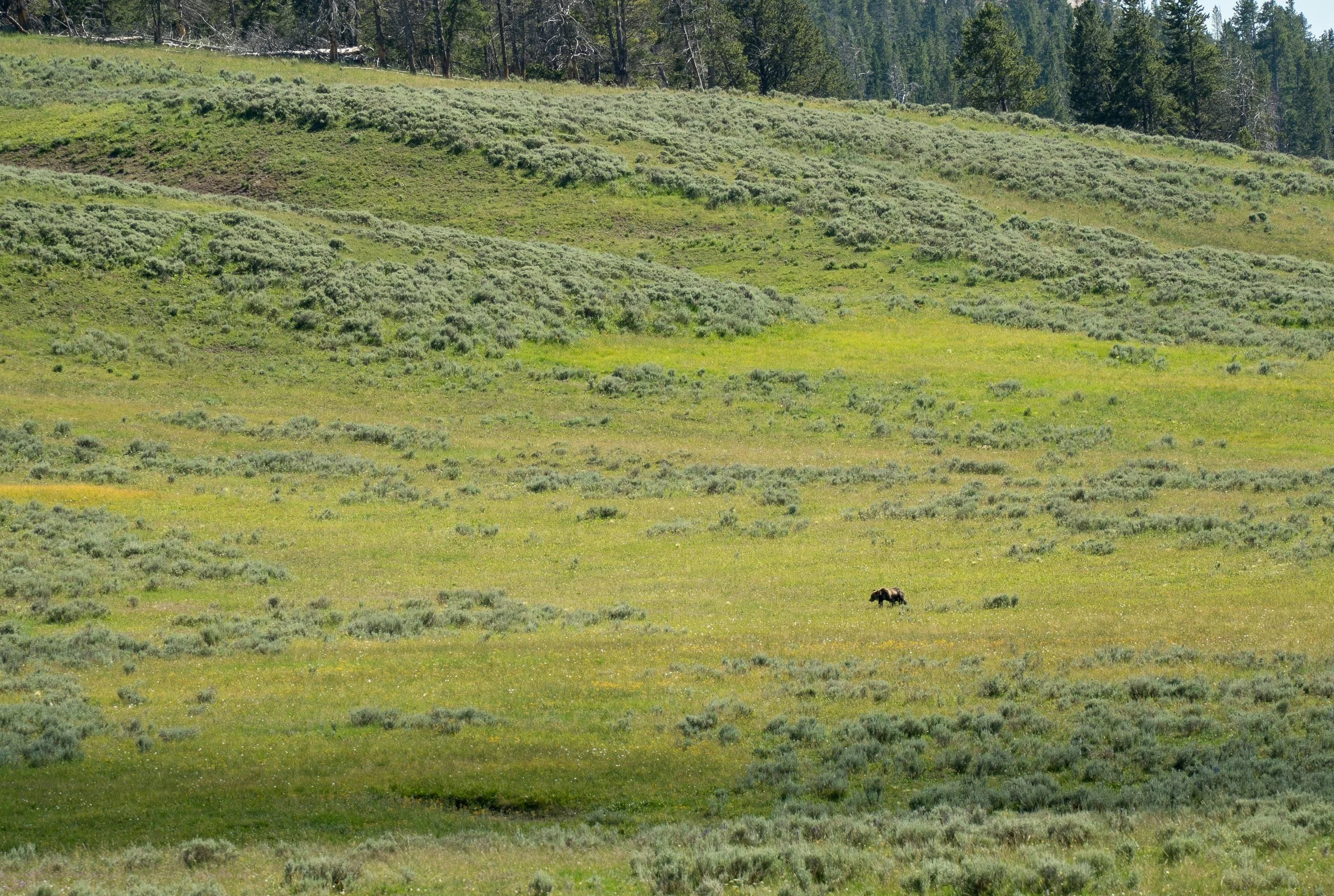
Most bears aren't standing right next to the road waving at you. They're dark shapes on a distant hillside, and if you don't know how to look, you'll drive right past them.
Start by slowing down and scanning edges. Bears love the line where forest meets meadow, so watch those tree lines carefully. Look for anything that seems out of place, like a dark rock that wasn't there a minute ago or a "stump" that suddenly moves. Binoculars make an enormous difference, and on our tours we'll help you get your eyes on animals that are way too far away to see clearly otherwise.
Also, pay attention to other wildlife. Ravens circling over one spot can mean there's a carcass nearby, and a carcass often means a bear. And yes, the classic Yellowstone "bear jam" is a real clue too. If you see a line of cars pulled over and people pointing, there's a good chance something exciting is happening!
Keep It Safe and Respectful
Seeing a bear is incredible, but it's important to do it the right way. Park rules require you to stay at least 100 yards from bears and wolves. That's about the length of a football field, which is exactly why good binoculars and a long camera lens are so valuable.
Never stop in the middle of the road. Use pullouts, stay near your vehicle, and never approach, follow, or feed a bear. If you're heading out on a trail, carry bear spray, know how to use it, and make some noise as you hike. Bears that get used to people or human food often end up in trouble, and the best thing any of us can do is give them room to stay wild.
Getting the Shot
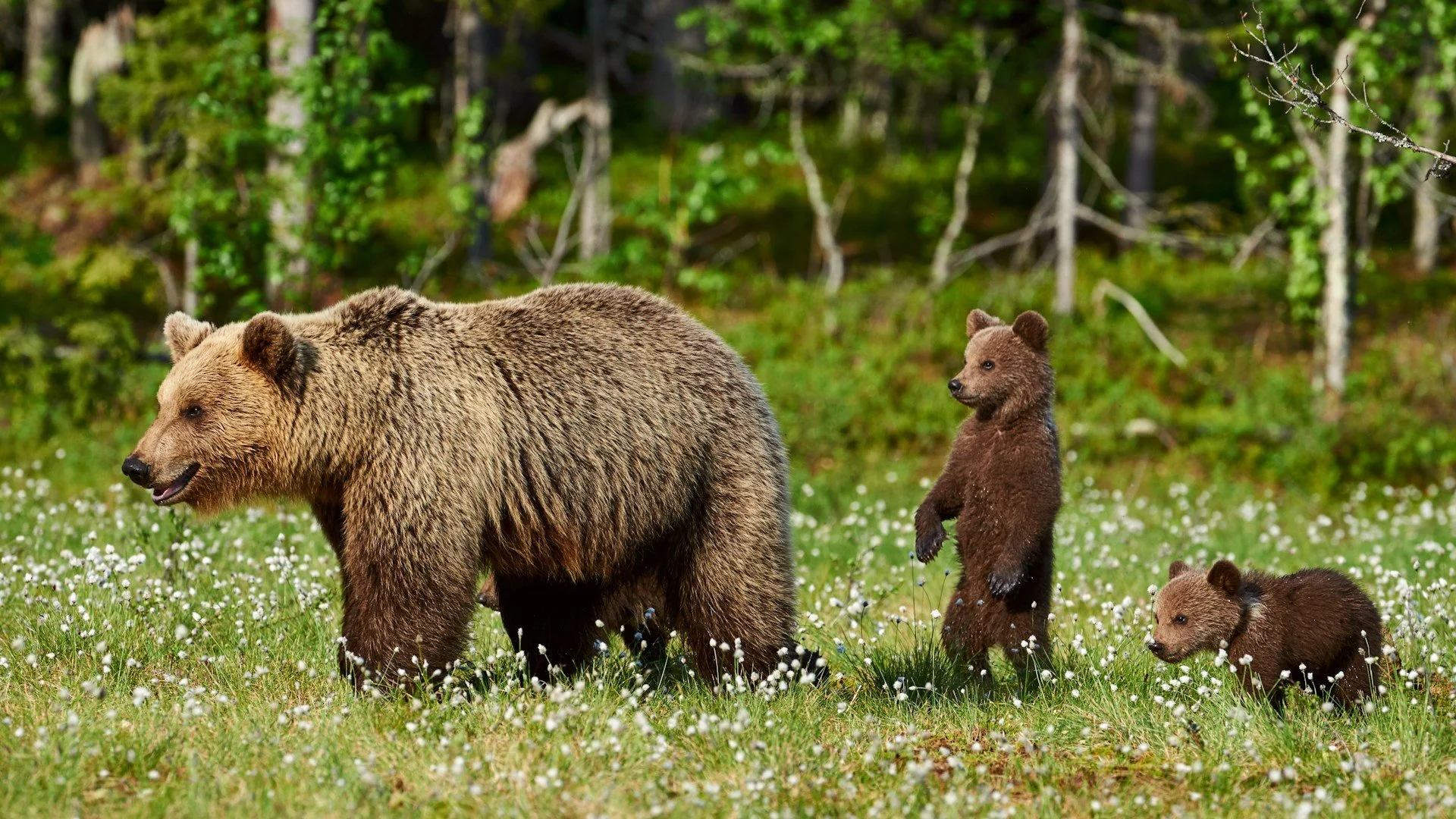
If you're a photographer, bears are one of the most rewarding and most challenging subjects in the park. A telephoto lens is a must, and early morning light is your best friend. Patience matters more than anything. Some of our favorite shots have come after 30 minutes of watching a bear slowly work its way closer to a clearing.
That's why so many photographers book a private day with us. It turns into one of those Yellowstone photography tours where you get time to linger for the right moment instead of rushing off to the next stop. For more inspiration, check out our list of the 10 best photography spots in Yellowstone.
Why a Guided Tour Helps
You can absolutely look for bears on your own, but having experienced Yellowstone tour guides with you changes the game. Our guides are out in the park day after day, so we know where animals have been showing up, how they've been behaving, and which pullouts give the best views. And because someone else is driving, everyone in your group gets to keep their eyes on the hillsides instead of the road.
Our Yellowstone guided tours leave from West Yellowstone and Big Sky, and we also offer pickups for Bozeman Yellowstone tours. If you'd like the day all to yourselves, our Big Sky private Yellowstone tours are a great way to make wildlife the main event. You can meet our guides here, and if you're planning a longer trip, our 3-Day Yellowstone Itinerary from West Yellowstone & Big Sky can help you map it all out. Coming in from the east side? Our parent company, CoveredGround Tours, runs Yellowstone tours out of Cody, Wyoming.
There's nothing quite like that moment when someone in the van whispers "bear!" and everyone goes quiet, staring at the same spot on the hillside. It never gets old for us, and we'd love to share it with you. We'll do our best to put you in the right place at the right time. Have questions before you book? Take a look at our FAQ or reach out to us directly. We can't wait to go bear spotting with you.