
Here in West Yellowstone, we can usually spot the photographers in a group before anybody says a word. They are the ones asking what time we will be at Grand Prismatic rather than whether we will be at Grand Prismatic.
We like those guests, because photography and good guiding want the same thing: being in the right place at the right hour. Yellowstone is not a park where you wander until something pretty appears. The light moves, the steam moves, the animals move, and the difference between a snapshot and a photograph you actually print is usually about forty minutes of timing.
So here are the ten spots we build our days around, roughly in the order you would hit them coming in from the west side, along with when we would want to be standing there.
The Best Photography Spots in Yellowstone:
1. Grand Prismatic Spring Overlook
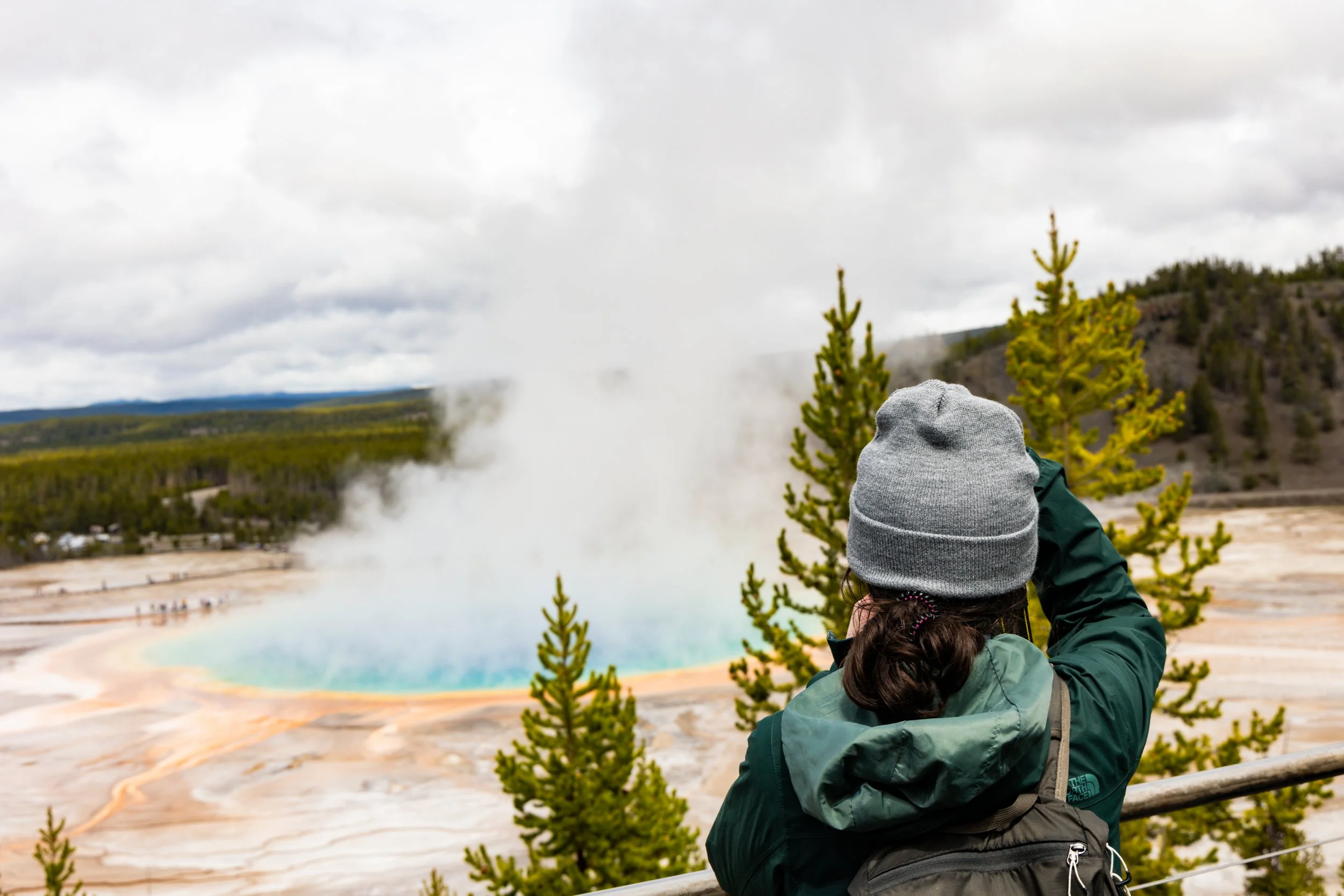
Everyone shoots Grand Prismatic from the Midway boardwalk and comes home disappointed. From ground level you are looking at a wall of steam, because you are standing at the same elevation as a 370 foot wide hot spring.
The overlook on the Fairy Falls trail is the shot. It is a little over a mile from the trailhead with a short climb at the end, and it puts you above the spring looking down into the color. Mid to late morning on a cool day is tricky because the steam is thick, so we aim for a warmer part of the day with some wind, which sounds backward until you see it work.
2. Midway Geyser Basin
Do not skip the boardwalk just because the overlook is better for the big spring. Midway has Excelsior Geyser Crater right next to it, which dumps thousands of gallons a minute into the Firehole River, and the runoff channels pouring down the bank are some of the best abstract color in the park.
Early morning here is a different world. The steam off the river in the cold catches the first light and the whole basin glows. We have had guests shoot an entire card before we ever reached the main spring!
3. The Upper Geyser Basin
Old Faithful is the headliner, and it is worth getting, but the basin around it holds more geysers than anywhere else on earth and almost nobody photographs them.
Castle Geyser has the best cone in the park. Grand Geyser is the tallest predictable one and goes off in a column you can frame against the sky. The boardwalk loop past Morning Glory Pool runs nearly two miles and the crowds thin dramatically after the first quarter mile. If you only have one day, this is the stretch where we would spend it.
4. Great Fountain Geyser on Firehole Lake Drive
This is our favorite spot in the park that most visitors drive right past. Firehole Lake Drive is a short one-way loop off the main road, and Great Fountain Geyser sits on a wide terraced platform that holds a thin sheet of water.
When it erupts at sunset, the whole platform turns into a mirror and you get the eruption twice. Eruption windows are long and loose, so this is a patience spot rather than a schedule spot, which is exactly why a private day works better here than a fixed itinerary.
5. The Madison River Corridor
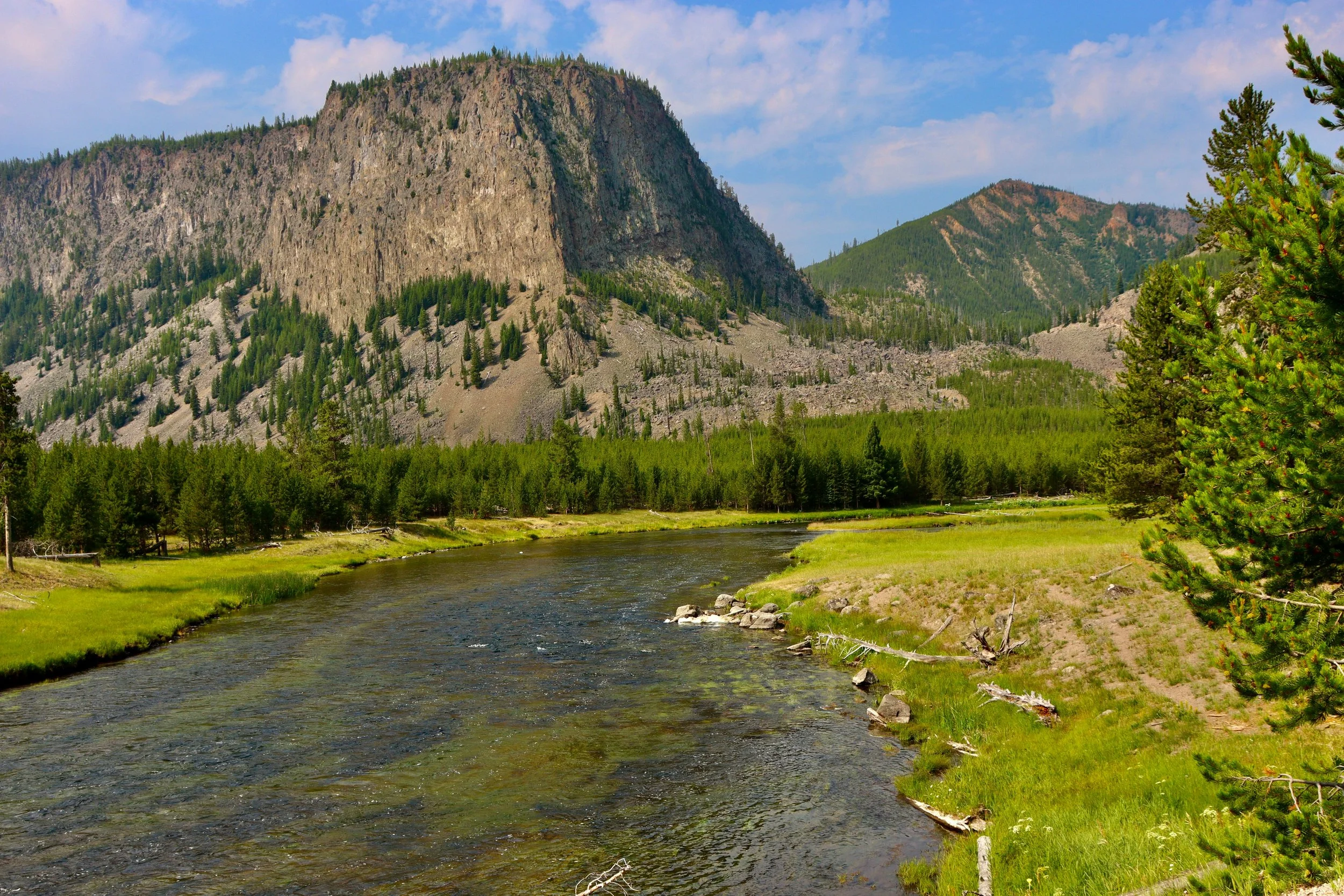
The drive in from the West Entrance follows the Madison for fourteen miles, and we think it is the most underrated photography in Yellowstone.
Bison work this valley constantly. Elk show up along the banks in fall, bugling in the fog. The river steams in cold weather because of the thermal input upstream, and on a clear October morning the light coming through that mist with a bull elk standing in it is about as good as it gets. The nice part is that it costs you nothing, because you are driving through it anyway.
6. Artist Point
The classic view of the Lower Falls and the Grand Canyon of the Yellowstone, and it earns the reputation. The canyon walls are yellow and pink rhyolite, hydrothermally altered rock, and when the morning sun hits them the color is almost unbelievable.
Morning is the answer here. By afternoon you are shooting into harsh light with the falls partly in shadow. The platform is also small and fills up fast in summer, which is another argument for an early start.
7. The Brink of the Lower Falls
Artist Point gives you the postcard. The Brink trail gives you the feeling.
It is a steep switchback descent of about 600 feet that puts you at the lip of the falls where 63,000 gallons a second go over the edge. You feel it in your chest. Wide angle is the move, and you will be dealing with spray, so bring something to wipe your lens. The climb back up is the price of admission and it is worth every step.
8. Mammoth Hot Springs
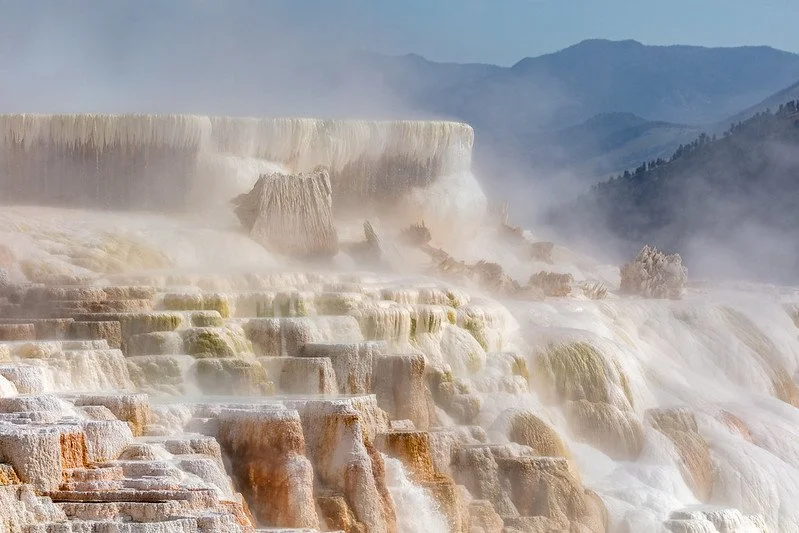
Nothing else in Yellowstone looks like this. The terraces are travertine rather than silica, which is why they are white and layered rather than blue and steaming, and the formations change shape from one season to the next as the water finds new paths.
Overcast days are better here than sunny ones, because bright sun blows out the white terraces completely. The elk that lounge on the Mammoth lawns in fall are a bonus, and we have never once had a guest complain about that particular foreground.
9. Lamar Valley
The wildlife valley, and the reason we push hard for a dawn start on our Upper Loop tour. Wolves, grizzlies, bison herds, pronghorn, and the occasional moose all move through open sagebrush country where you can actually see across the ground.
Be realistic about reach. Most Lamar wildlife is photographed at 400mm and up, and park rules keep you 100 yards from wolves and bears for good reason. What a long lens and a tripod get you here is the shot nobody with a phone is going home with.

10. Hayden Valley
The other great wildlife valley, closer to the west side and easier to work into a single day. The Yellowstone River meanders through the middle of it, and the whole basin holds fog in the early morning that burns off in layers.
Bison are near guaranteed. Grizzlies are common in spring and early summer. Late afternoon into evening is the second window, and our Lower Loop tour is usually swinging back through here around then, which is not an accident.
Photography in Yellowstone really comes down to one thing, which is being willing to organize your day around light instead of around a checklist. That is hard to do when you are also navigating, finding parking, and guessing which overlook faces which direction. It is a lot easier when somebody else is driving and already knows that Artist Point wants morning and Great Fountain wants evening. Every one of our tours from West Yellowstone, Big Sky, and Bozeman is private and fully customizable, which for photographers means we can wait out a geyser or sit in a valley as long as the animals are cooperating. Lunch and park fees are included so the day does not get interrupted, and our van holds up to fourteen with room for gear. Coming in from the Wyoming side instead? Our parent company CoveredGround Tours runs the same kind of trips out of Cody. Take a look at all our tour options and current pricing, or get in touch and tell us what you are hoping to shoot. We will build the day around it!