What Wildlife Can You See in Yellowstone National Park?
Yellowstone National Park is not just a collection of geysers and hot springs. It is one of the last truly intact large-mammal ecosystems in the Northern Hemisphere: a wild, living landscape where predators and prey interact on open ground, often visible from the road, in ways you simply cannot witness anywhere else in North America.
People come from all over the world to see Yellowstone's wildlife, and for good reason. But here's something most first-time visitors don't realize until they're already standing in the park: knowing where to look makes all the difference between a trip where you saw a few bison from the highway and a trip where you watched a wolf pack move through Lamar Valley at sunrise.
Let's walk through what wildlife Yellowstone has to offer, and why having a Yellowstone wildlife guide who's been in the park every day of the season is the single biggest advantage you can give yourself.
1. Bison
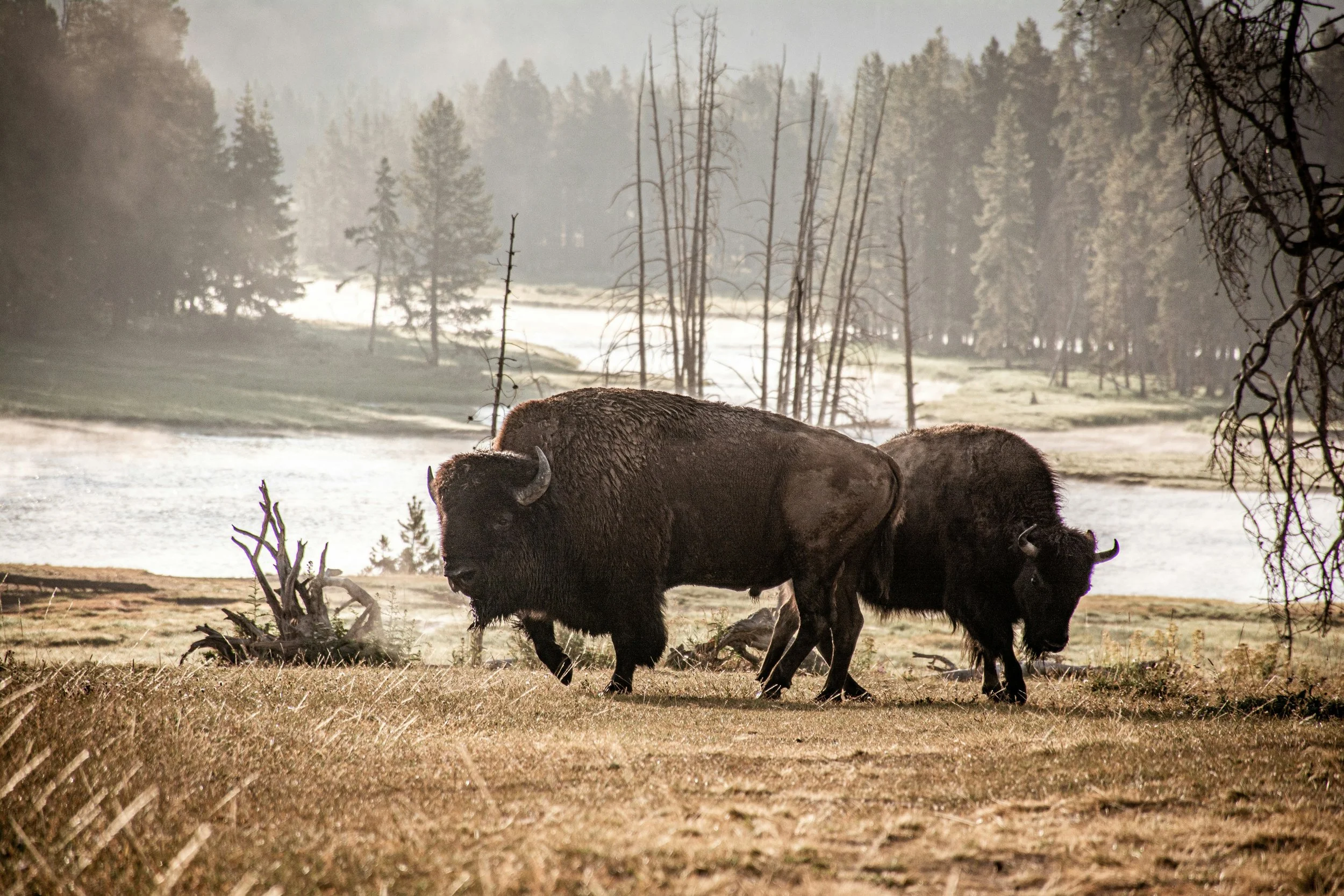
You will see bison. Hundreds of them. That's about as close to a guarantee as wildlife watching gets. Yellowstone is home to one of the largest and most genetically pure bison herds in North America, with roughly 4,000 to 5,000 animals roaming the park at any given time.
What surprises most visitors is the scale of the encounters. These are massive animals (bulls can exceed 2,000 pounds), and they have absolutely no interest in getting out of the road for you. Traffic jams caused by bison are a daily occurrence in Yellowstone, and if you've never sat in a van while a bison the size of a small car lumbers past your window, you're in for quite a moment.
Where to see them: Hayden Valley on the Lower Loop and Lamar Valley on the Upper Loop are the two premier bison-watching spots in the park. Both are broad, open river valleys where herds congregate and the views are unobstructed for miles.
2. Grizzly Bears & Black Bears
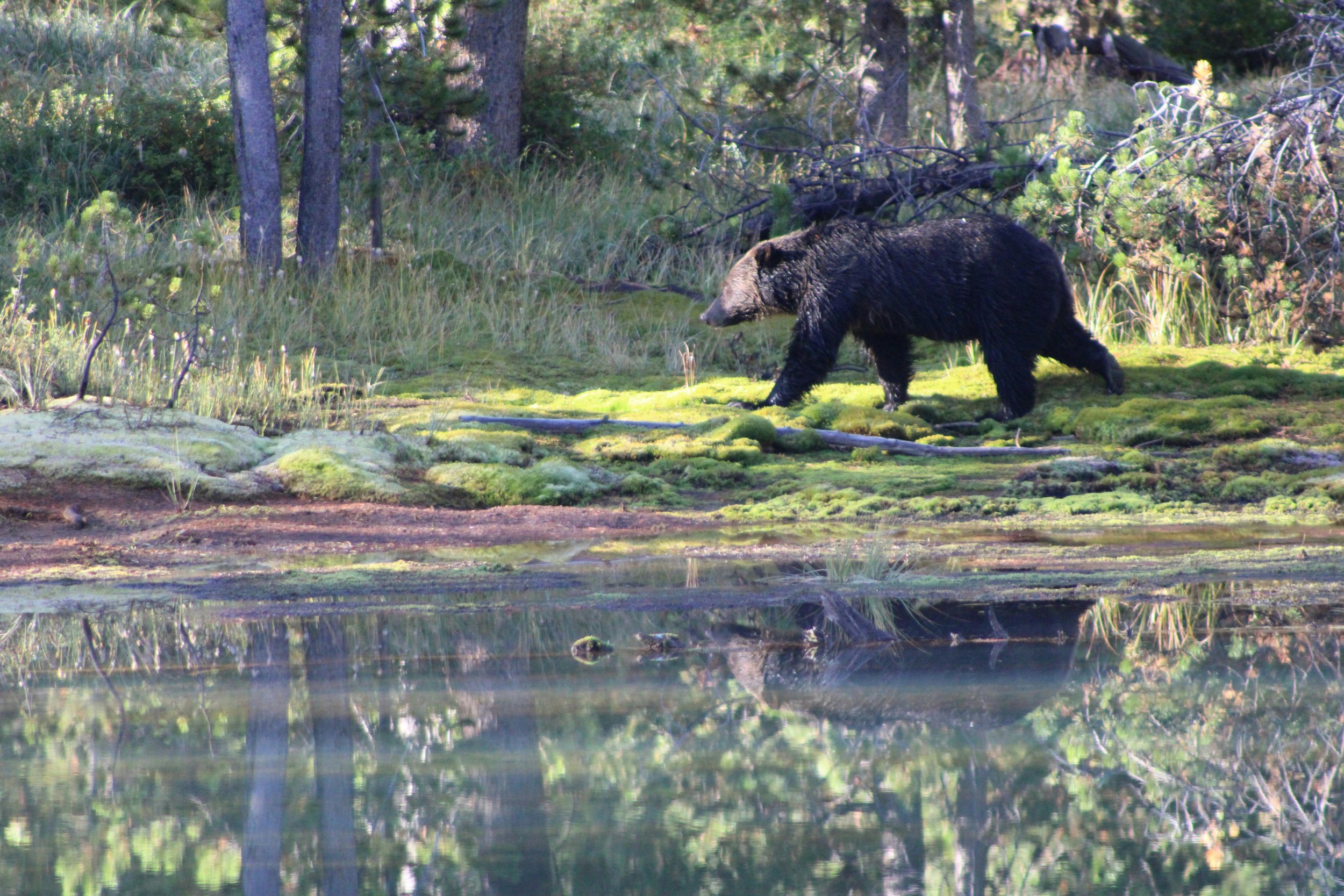
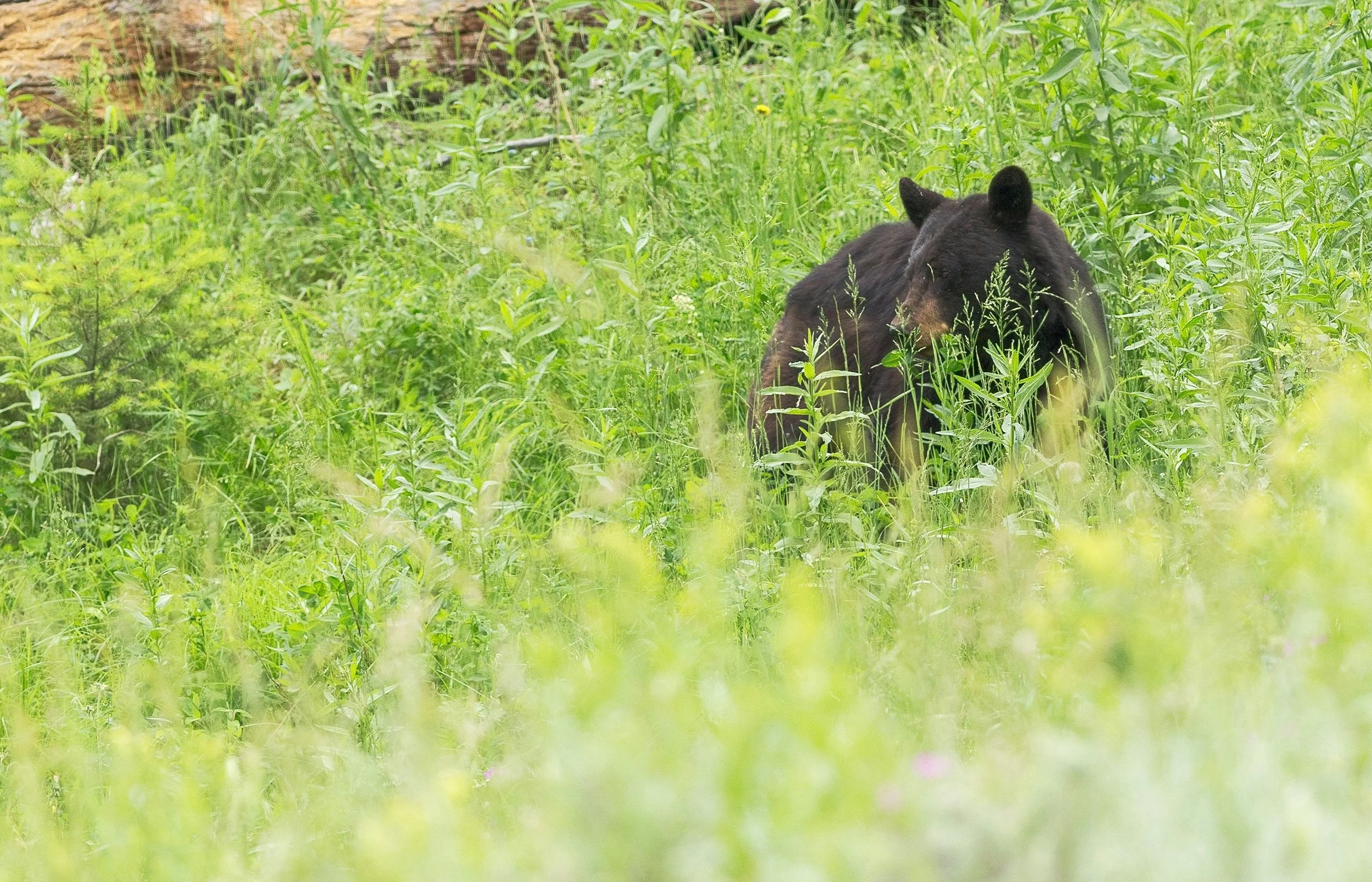
Yellowstone supports one of the most significant grizzly bear populations in the lower 48 states, with an estimated 700-plus grizzlies in the Greater Yellowstone Ecosystem. Black bears are also present throughout the park, particularly in forested areas.
Spotting a bear in Yellowstone is absolutely possible, but it's not a given, and the difference between seeing one and not seeing one often comes down to local knowledge. Bears tend to follow food sources, and those patterns shift throughout the season. In spring, grizzlies emerge from hibernation and congregate near meadows and carcasses left by winter. Later in summer, they move into berry patches and higher elevations. Come fall, they enter hyperphagia, feeding aggressively to pack on fat before denning.
A guide who is in the park every single week of the season knows where bears have been showing up recently, which pullouts are drawing wildlife watchers, and how to read the landscape for activity. That kind of real-time intelligence is something no map or travel blog (including this one!) can replicate.
Where to see them: Hayden Valley and the Dunraven Pass area are consistently productive for grizzly sightings. The northeast entrance corridor and Lamar Valley see strong bear activity in spring and fall. Head east to Lake Butte Overlook for frequent bear activity.
3. Wolves
The gray wolf is Yellowstone's most storied and sought-after wildlife sighting. Reintroduced in 1995 after a 70-year absence, wolves have reshaped the entire Yellowstone ecosystem in a cascade of effects that biologists call a trophic cascade. Their presence changed where elk graze, which changed riverbank vegetation, which changed stream flow. It is one of the most remarkable ecological stories of the 20th century, and it's still unfolding.
Today Yellowstone has multiple wolf packs, and Lamar Valley on the northern range is far and away the best place on Earth to observe wild wolves in their natural environment. On a good morning in spring or fall, you might watch a pack moving across the valley floor, hunting, playing, or simply resting in the sagebrush, all from a safe distance with a spotting scope.
Where to see them: Wolf sightings are never guaranteed. But guided tours that focus on the northern range, departing early in the morning when wolves are most active, dramatically improve your odds. The Yellowstone Scenic ToursUpper Loop Tour is the right call if wolves are at the top of your list.
4. Elk
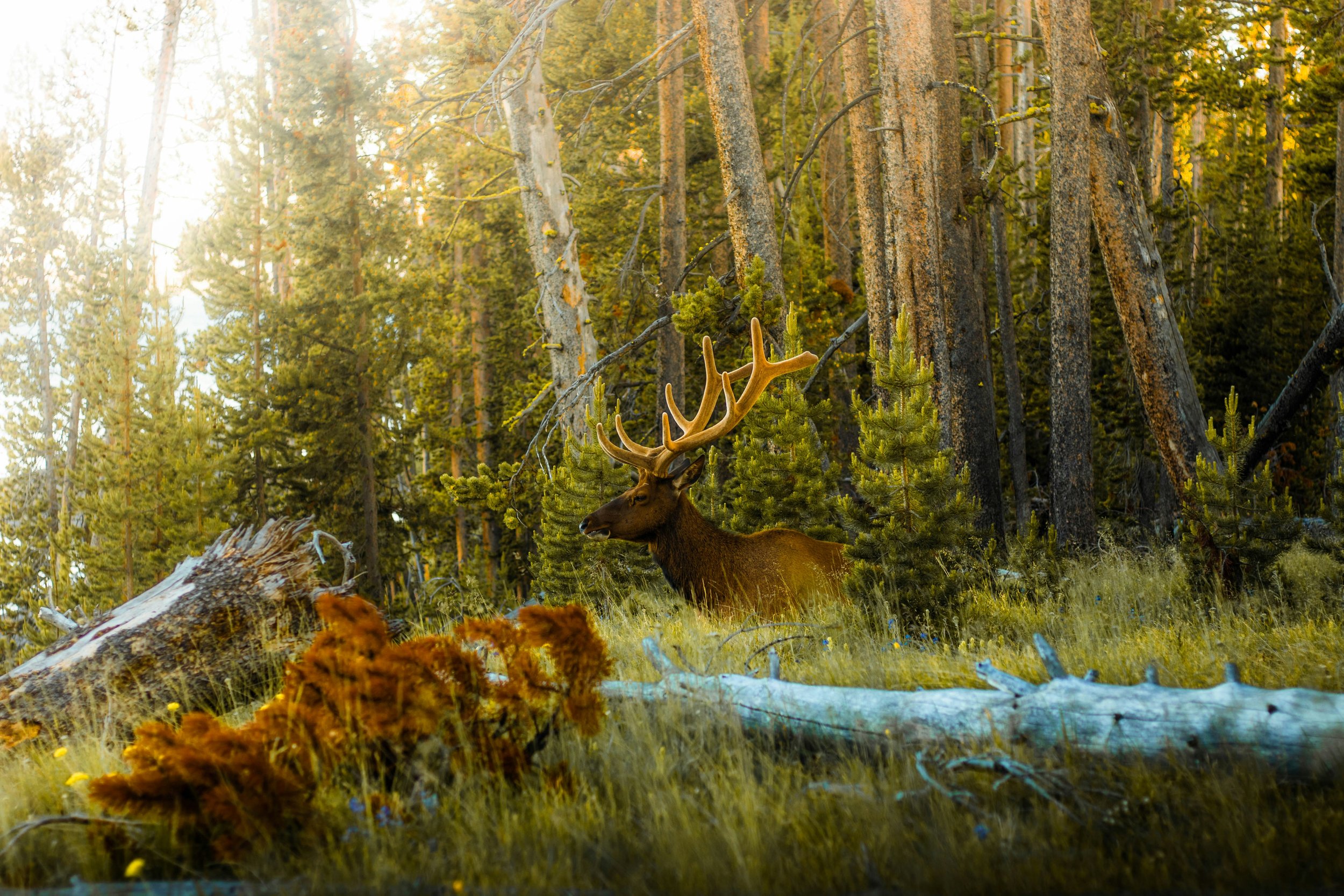
Elk are among the most abundant large mammals in Yellowstone, with the park supporting tens of thousands of animals across multiple herds. In summer, large herds spread across the park's meadows and valleys. Come September and October, the elk rut transforms Yellowstone into something truly primal. Bull elk bugle across open meadows, sparring for dominance, their calls echoing off canyon walls in the cool morning air.
Where to see them: Mammoth Hot Springs, in the northern part of the park, is famous for its elk. The animals frequently wander right through the historic village, grazing on lawns and lounging near the boardwalks with complete indifference to the tourists gawking at them. It's one of Yellowstone's most reliably entertaining and surprising scenes.
5. Moose
Moose are the largest members of the deer family and one of Yellowstone's most impressive animals to encounter up close. They tend to prefer dense willow thickets and riparian areas near streams and marshes, which makes them a little less visible than bison or elk — but no less spectacular when you find one.
Where to see them: The northeast region of the park, particularly around Soda Butte Creek and the Lamar River corridor, is one of the more reliable areas for moose sightings. Early morning, when moose are feeding, is the best time to look.
6. Pronghorn Antelope
Pronghorn antelope are the fastest land animal in the Western Hemisphere, capable of sustaining speeds over 55 mph. An evolutionary holdover from a time when the North American continent was home to cheetah-like predators.
They're often overlooked in favor of the "bigger" wildlife, but catching a pronghorn in full sprint across an open flat is a sight worth stopping for.
Where to see them: Yellowstone's pronghorn herds are most commonly spotted in the open sagebrush flats near the north and northeast entrances, particularly in the areas around Mammoth and the Lamar Valley corridor.
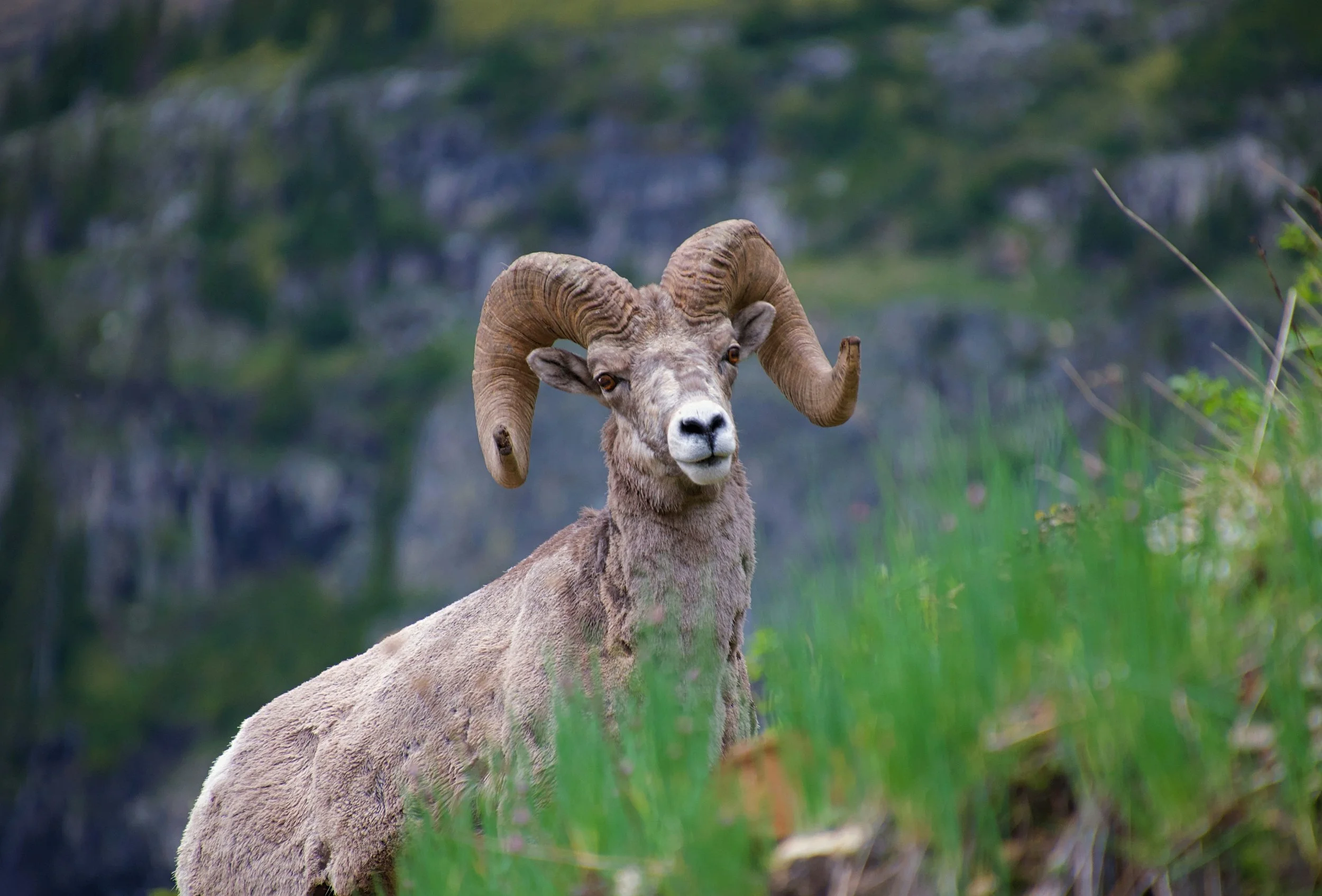
7. Bighorn Sheep
Bighorn sheep are one of the more challenging Yellowstone wildlife sightings simply because they spend most of their time on the rocky, steep terrain that gives them safety from predators. The sight of these animals navigating near-vertical rock faces is unforgettable. Fall is the best time to see bighorn sheep, when the rams come down to lower elevations for the rut. Their horn-clashing battles are among the most dramatic wildlife spectacles the park offers.
Where to see them: These animals typically hang out on the cliffs near Dunraven Pass or along the Mount Washburn area on the Upper Loop. They can also be frequently spotted coming from the east entrance along the Northfork valley.
8. Coyotes & Foxes
Coyotes are Yellowstone's most frequently seen predator and are found throughout the park. They're often spotted trotting through meadows, hunting rodents with that characteristic pounce-and-dive technique that makes them endlessly watchable. Red foxes are also present in the park, though less commonly seen, and their bright coloring makes them a genuine highlight when they do appear.
Where to see them: Foxes and Coyotes are common in Lamar Valley heading into Cooke City, but you really have the opportunity to come across them at any point during your drive through Yellowstone.
The Secret to Seeing More Wildlife: Go With Someone Who Was Just There
Here's the honest truth about wildlife watching in Yellowstone: the park covers over 2.2 million acres. Animals don't announce where they'll be. And a first-time visitor driving through with a map has the same chance of finding a grizzly bear or a wolf pack as they do of randomly bumping into a specific person in a city of millions.
Yellowstone tour guides change that equation entirely.
The team at Yellowstone Scenic Tours is in the park constantly throughout the season. They know which wolf pack has been active near which road. They know that a grizzly was spotted near a particular meadow two mornings ago and is likely still in the area. They know that the bison herd has moved into Hayden Valley and that the light will be perfect there at 7am. They carry spotting scopes and know how to use them. And they know the difference between a brown rock on a hillside and a sleeping bear, a distinction that matters enormously.
That local, real-time knowledge is simply not something you can buy at a gift shop or Google the night before. It's built from thousands of hours in the park, and it is the single biggest factor in how much wildlife you actually see. Book your Yellowstone wildlife tour here.
Plan Your Wildlife Adventure With a Yellowstone Tour Guide
Yellowstone Scenic Tours operates guided Yellowstone wildlife tours from Big Sky, West Yellowstone, and Bozeman, MT, with pickup included. Whether you want to focus on the Lower Loop's bison-packed valleys and grizzly country or the Upper Loop's wolf-watching northern range, the guides will put you in the right place at the right time.
Lower Loop Tour — Hayden Valley, Grand Canyon of Yellowstone, Old Faithful, grizzly and bison country:yellowstonescenictours.biz/lower-yellowstone-tour
Upper Loop Tour — Lamar Valley, Mammoth, Dunraven Pass, wolf and bighorn sheep territory:yellowstonescenictours.biz/upper-yellowstone-tour
Private Tour — Your group, your pace, fully customized:yellowstonescenictours.biz/private-yellowstone-tour