Our 10 Favorite Geysers and Hot Springs in Yellowstone National Park
Yellowstone National Park sits atop one of the world's most powerful volcanic hotspots, making it the undisputed geothermal wonder of the planet. With more than 10,000 hydrothermal features (including roughly half of all the world's geysers!), every trail and boardwalk leads to something jaw-dropping. Whether you're booking Big Sky Yellowstone Tours or exploring on your own, knowing which geysers and hot springs deserve a spot on your itinerary makes all the difference.
Here are our 10 absolute favorite geysers and hot springs in Yellowstone National Park:
1. Old Faithful Geyser
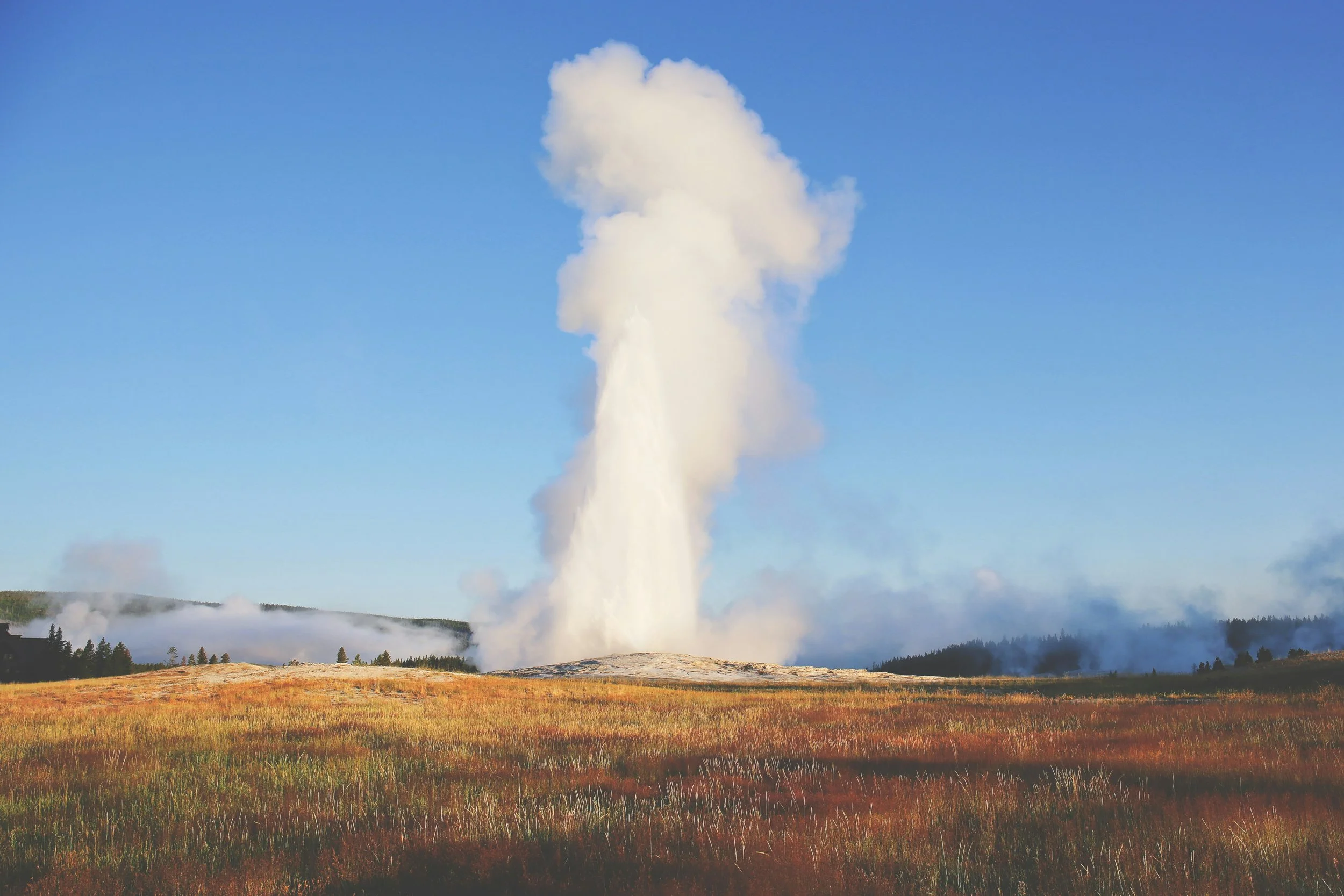
What Makes It Special: Old Faithful is Yellowstone's most iconic landmark, and for good reason. It's not the tallest or the most powerful geyser in the park, but it is the most reliable, shooting a spectacular column of boiling water and steam between 100 and 185 feet into the air. There's nothing quite like watching hundreds of visitors fall completely silent as the eruption builds, then explodes skyward. Even on your tenth visit, it still takes your breath away.
Location: Upper Geyser Basin, Old Faithful area. Easily accessible from the Old Faithful Visitor Education Center.
Important Things to Know:
Erupts approximately every 44 to 125 minutes (average ~90 minutes)
Predicted eruption times are posted at the Visitor Center and on the park's app, usually accurate within 10 minutes
Viewing benches surround the geyser; arrive 30-40 minutes early for a good seat
Night eruptions under the stars are magical if the timing works in your favor
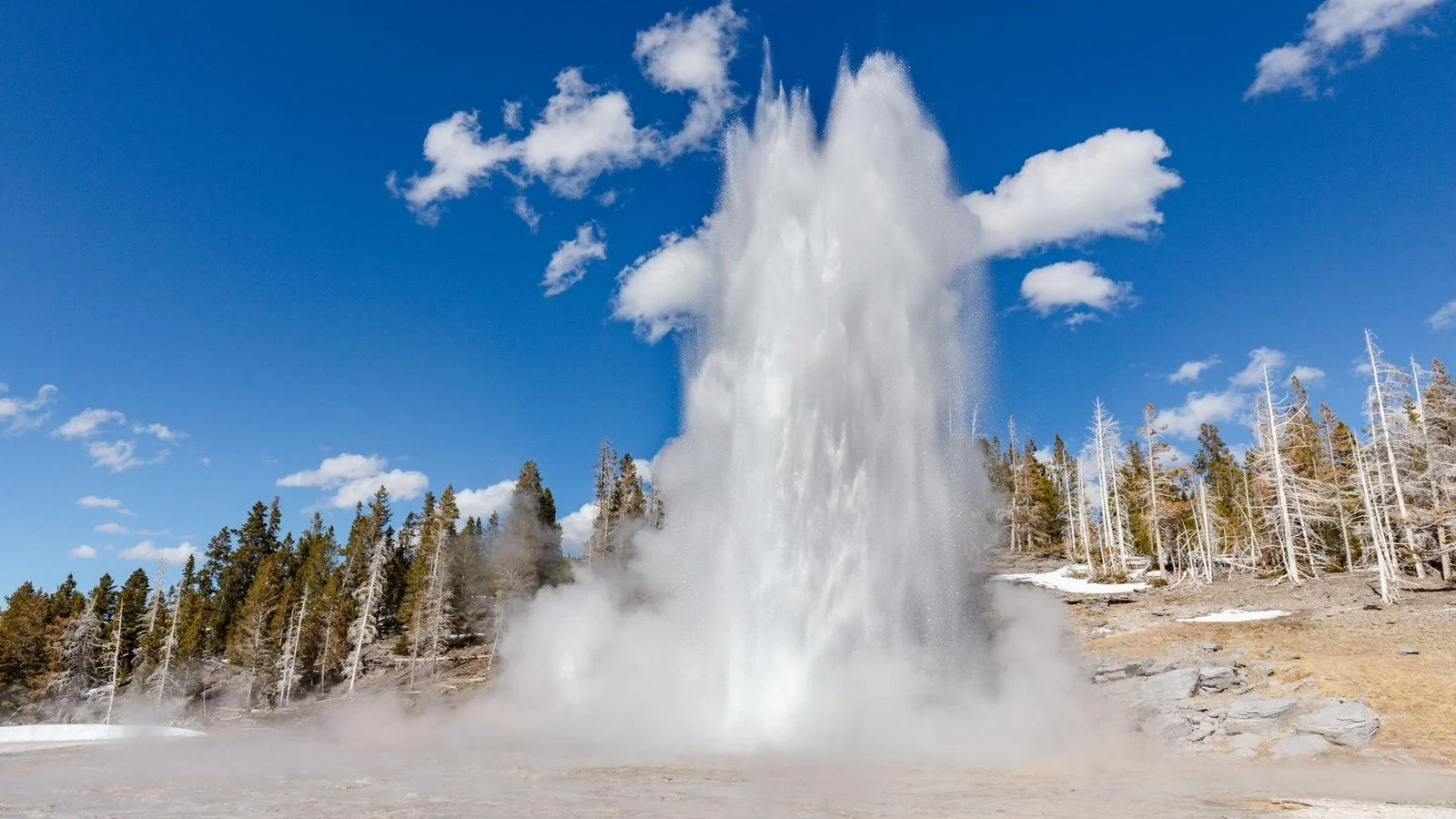
Photo sourced from: Yellowstone National Park Service
2. Grand Geyser
What Makes It Special: Grand Geyser earns its name. It's the tallest predictable geyser in the world, regularly launching water up to 200 feet in the air. What sets it apart is the duration: eruptions typically last 9 to 12 minutes and often feature multiple spectacular bursts in succession. Watching Grand is a full event, not just a moment.
Location: Upper Geyser Basin, about a 1-mile walk from the Old Faithful Visitor Center along the paved boardwalk.
Important Things to Know:
Erupts every 7 to 15 hours; timing predictions are available at the Visitor Center
Look for the companion geyser, Turban, which erupts shortly before Grand as a reliable signal that Grand is about to blow
The walk there passes Castle, Riverside, and Beauty Pool, making it a rewarding stroll in its own right
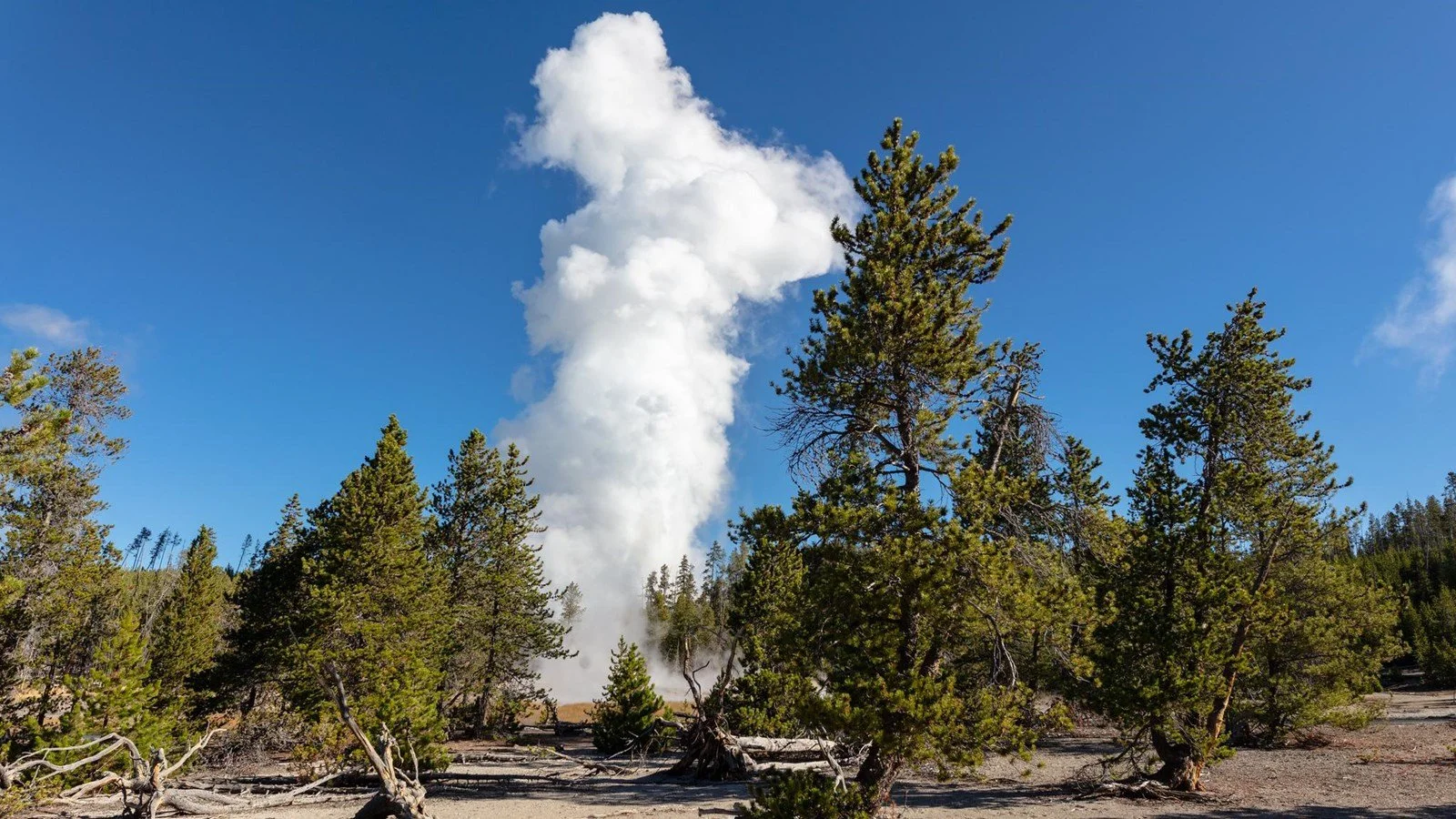
Photo sourced from: Yellowstone National Park Service
3. Steamboat Geyser
What Makes It Special: Steamboat Geyser holds the title of the world's tallest active geyser, with major eruptions reaching heights of 300 to 400 feet. When it goes off, it's genuinely awe-inspiring: a raw, roaring force of nature that dwarfs everything around it. Between major eruptions, it constantly vents steam and puts on minor water displays, so there's always something to see.
Location: Norris Geyser Basin, in the Back Basin section. Norris is located in the north-central part of Yellowstone.
Important Things to Know:
Major eruptions are unpredictable and can happen hours or years apart (though it has been remarkably active in recent years)
Minor eruptions occur frequently and are worth watching
The Norris Geyser Basin is the hottest and most dynamic thermal area in the park, making it a fascinating place to spend time regardless of whether Steamboat erupts
Wear layers; the basin can be cooler due to steam and wind
4. Castle Geyser
What Makes It Special: Castle Geyser is believed to be one of Yellowstone's oldest geysers. Its massive, cone-shaped sinter formation, built up over thousands of years, looks like something from another world. The eruption itself is dramatic and prolonged, and the post-eruption steam phase can roar for 30 to 40 minutes, making it uniquely powerful and photogenic.
Location: Upper Geyser Basin, approximately 0.5 miles from Old Faithful along the main boardwalk.
Important Things to Know:
Erupts approximately every 10 to 12 hours, with predicted times posted at the Visitor Center
The water phase lasts about 20 minutes, followed by a loud, forceful steam phase
One of the most photographed geysers in the park after Old Faithful
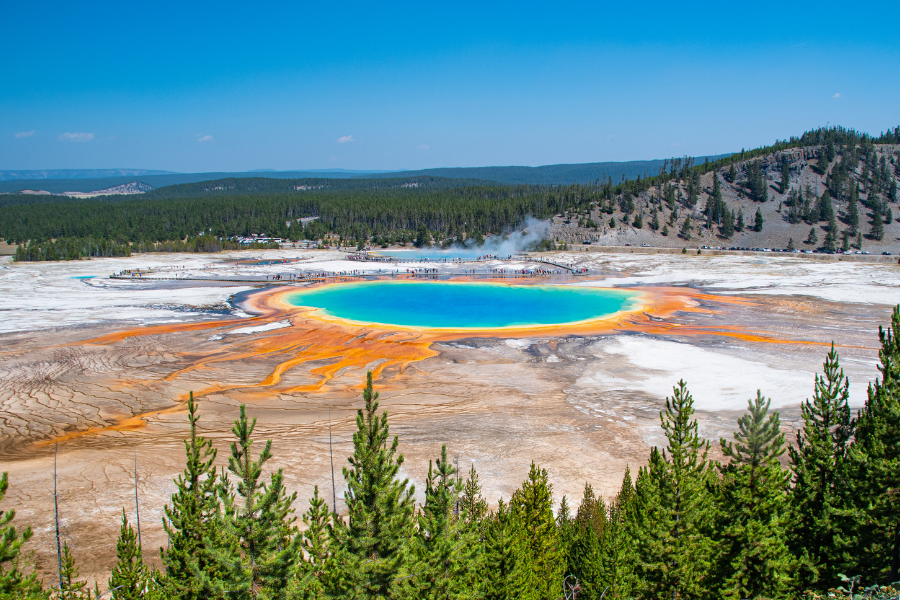
5. Grand Prismatic Spring
What Makes It Special: Grand Prismatic Spring is not a geyser, but it may be something even more visually stunning. It's the largest hot spring in the United States and the third largest in the world, measuring roughly 370 feet in diameter. The colors are almost impossibly vivid: deep sapphire blue in the superheated center, transitioning through turquoise, green, yellow, and burnt orange at the edges, where heat-loving microorganisms called thermophiles create their living rainbow. Seen from the overlook, it looks like an alien planet.
Location: Midway Geyser Basin, between Old Faithful and Madison Junction.
Important Things to Know:
Best viewed from the Grand Prismatic Spring Overlook, a short, moderately steep trail off the Fairy Falls trailhead
Boardwalk-level views are beautiful but don't capture the full scale; the overlook is a must
Colors are most vivid on sunny days when the water's blue is at its deepest
The spring discharges roughly 560 gallons of water per minute at around 160°F
6. Riverside Geyser
What Makes It Special: Riverside Geyser is one of Yellowstone's most picturesque geysers. It erupts from the bank of the Firehole River at an angle, sending a graceful arc of water 75 feet into the air and directly over the river. When sunlight catches the spray, rainbows appear in the mist. It's quieter and less crowded than Old Faithful, giving it an intimate, almost secret-garden quality.
Location: Upper Geyser Basin, about 1.5 miles from Old Faithful along the river walk.
Important Things to Know:
Erupts approximately every 5.5 to 6.5 hours, with predicted times posted at the Visitor Center
Eruptions last about 20 minutes
One of the most reliably predicted geysers in the park
The riverside setting makes it a favorite for photographers and nature lovers
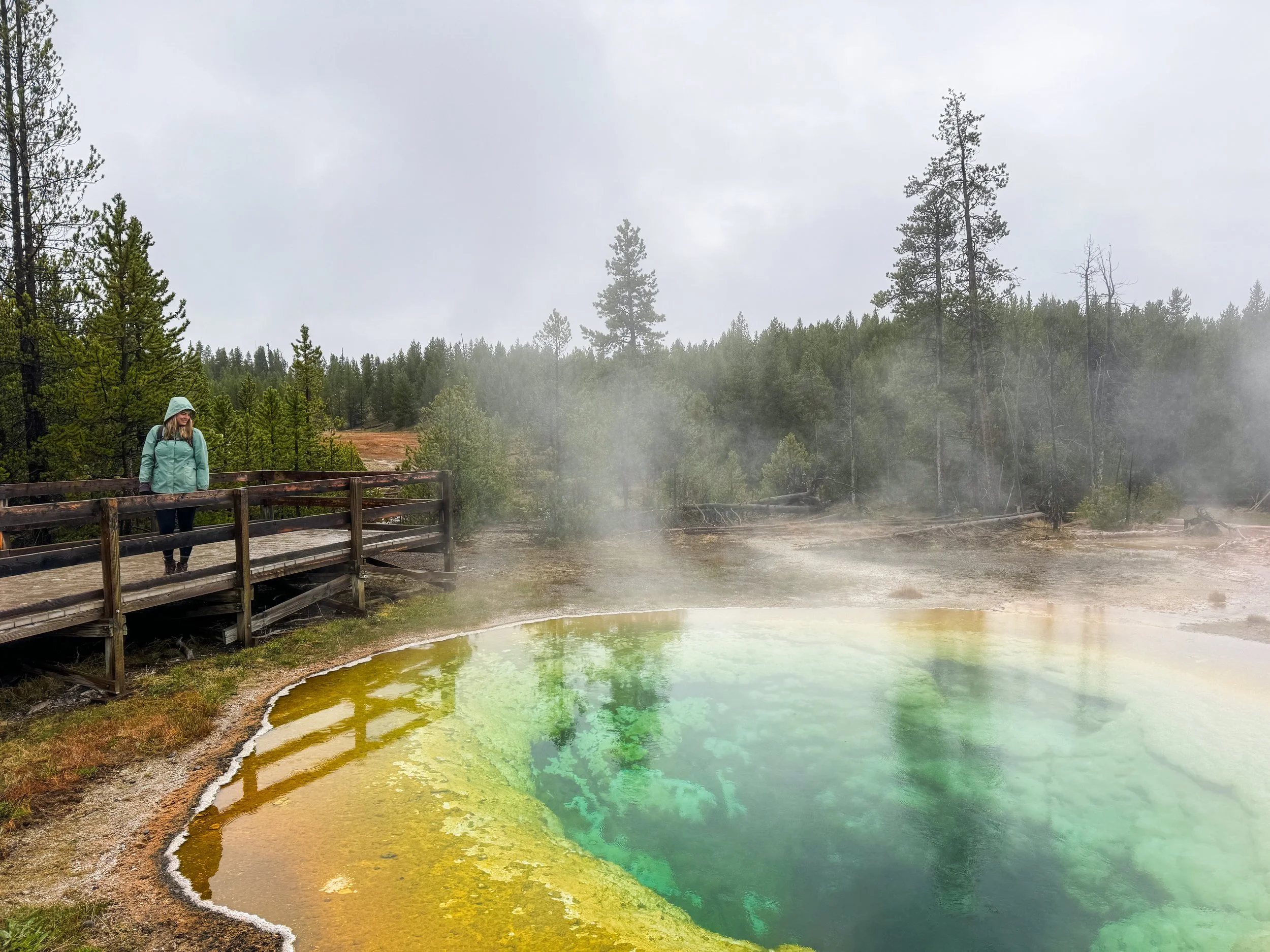
7. Morning Glory Pool
What Makes It Special: Morning Glory Pool was once one of Yellowstone's most brilliantly colored thermal features, with a stunning deep blue center and yellow-orange edges that inspired its flower-like name. Today, it's also a cautionary tale. Decades of visitors tossing coins and debris into the pool partially blocked its vent, lowering the water temperature and allowing more colorful but less heat-tolerant microbes to take over. It's still gorgeous, but it tells an important story about protecting these fragile wonders.
Location: Upper Geyser Basin, at the far end of the main boardwalk loop, approximately 1.5 miles from Old Faithful.
Important Things to Know:
The walk to Morning Glory Pool passes dozens of smaller geysers and pools, so allow plenty of time
Never throw anything into thermal features. Even a single coin can cause lasting damage
Water temperature is around 172°F, so stay on the boardwalk at all times
8. Fountain Paint Pot
What Makes It Special: Fountain Paint Pot is one of Yellowstone's most unique thermal features: a boiling mud pot that bubbles, plops, and spatters in shades of pink, gray, and white. The area also contains all four types of Yellowstone's hydrothermal features (geysers, hot springs, fumaroles, and mud pots) within a short loop, making it one of the most geologically complete stops in the entire park.
Location: Lower Geyser Basin, along Fountain Flat Drive, between Madison Junction and Old Faithful.
Important Things to Know:
The Fountain Paint Pot Loop is a 0.5-mile, fully accessible boardwalk suitable for all ages and abilities
Mud consistency changes seasonally, becoming thicker in late summer when water levels drop
Clepsydra Geyser, located on the same loop, erupts almost continuously and is a crowd favorite
Arrive early morning for fewer crowds and better light
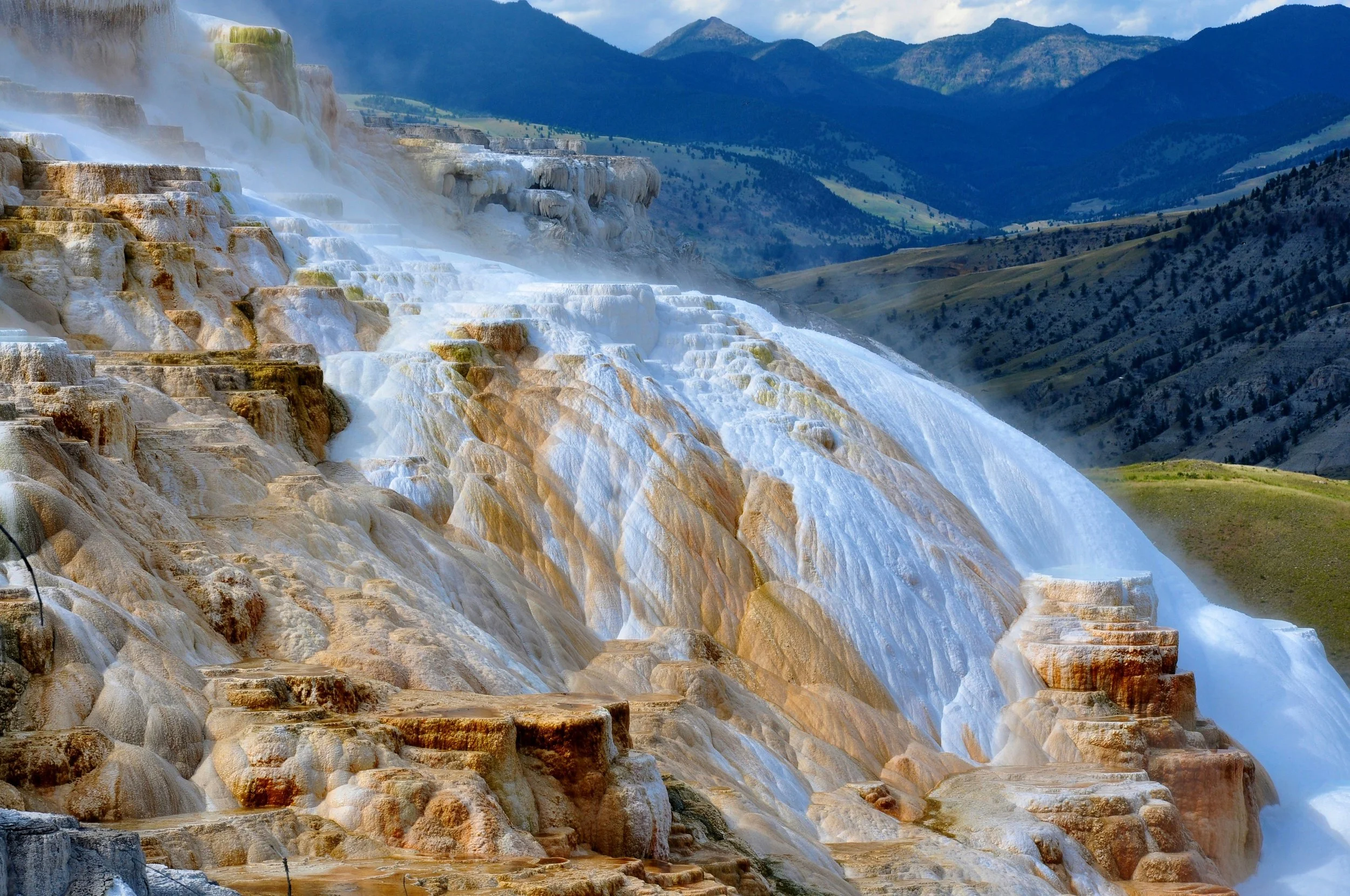
9. Mammoth Hot Springs Terraces
What Makes It Special: Mammoth Hot Springs is unlike anything else in Yellowstone. Instead of explosive geysers, it features an ever-changing landscape of travertine terraces: layered shelves of mineral-rich calcium carbonate deposited by flowing hot water. The formations look like a frozen waterfall or a surreal wedding cake, colored by heat-loving microbes in shades of white, cream, orange, and brown. Because they're constantly shifting, the terraces look different every single season.
Location: Mammoth Hot Springs, in the northern part of Yellowstone near the North Entrance at Gardiner, Montana.
Important Things to Know:
Both Lower and Upper Terraces are accessible; the Upper Terrace Drive is ideal for those with limited mobility
Active and dormant areas change frequently, and what's flowing one year may be dry the next
Palette Spring and Canary Spring are typically the most active and colorful
Mammoth village has lodging, dining, and a visitor center, making it a great base for Yellowstone tours from West Yellowstone or Big Sky
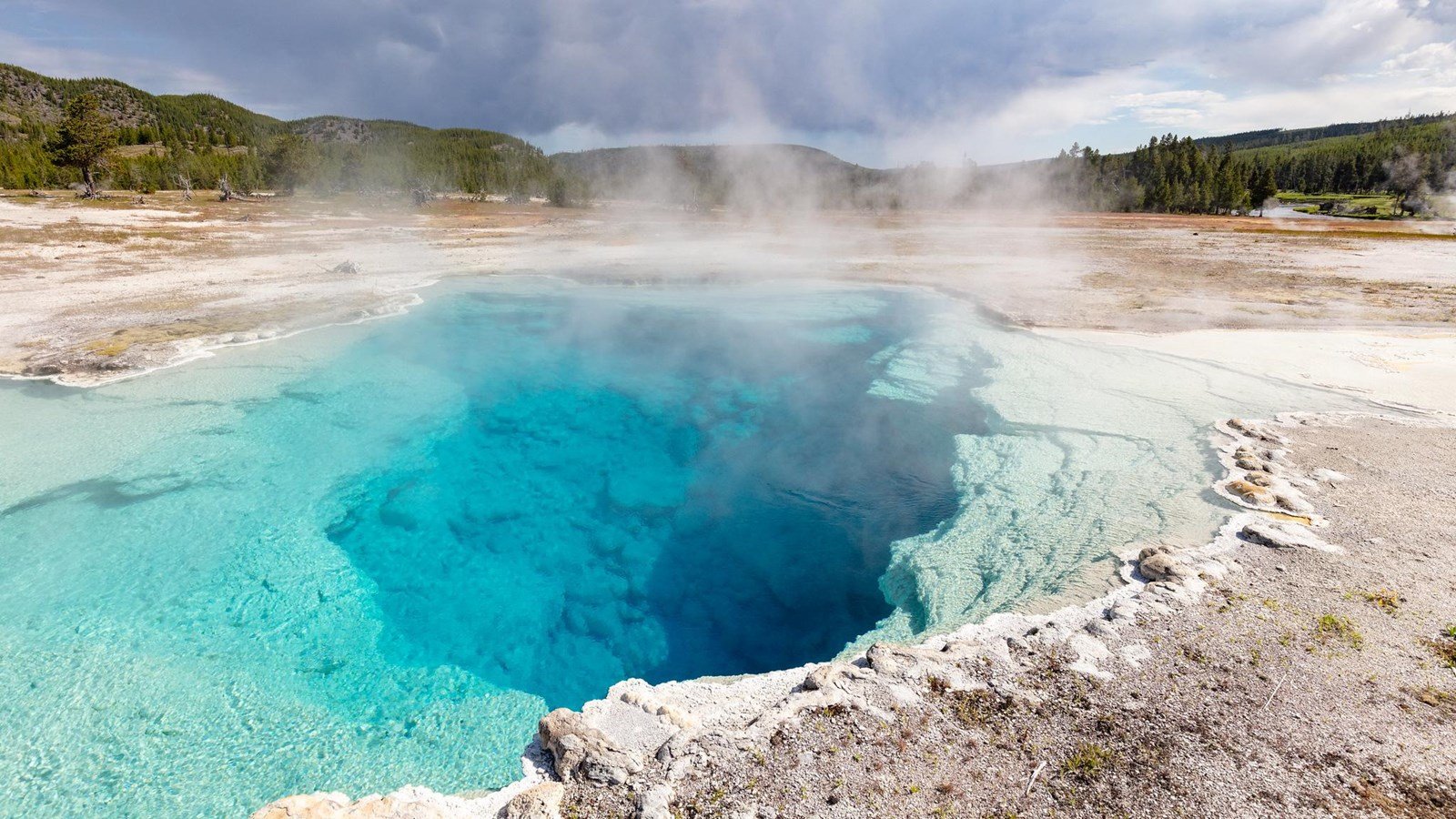
Photo sourced from: Yellowstone National Park Service
10. Sapphire Pool
What Makes It Special: Sapphire Pool lives up to its name with water so vividly, deeply blue it seems almost artificial. Located in the Biscuit Basin area, it's one of Yellowstone's most jewel-like hot springs, with crystalline clarity and a color that shifts from electric blue at the center to rich teal and green at the edges. It's quieter than the Upper Geyser Basin and rewards visitors who venture just a little further down the road.
Location: Biscuit Basin, approximately 2 miles north of Old Faithful on the main park road.
Important Things to Know:
A short boardwalk loop (about 0.5 miles) also passes Avoca Spring and Mustard Spring
Sapphire Pool erupted violently following the 1959 Hebgen Lake earthquake, but today it's a calm, non-eruptive hot spring
Water temperature reaches approximately 200°F, so the boardwalk keeps you at a safe distance
Parking can fill midday quickly; aim for early morning or late afternoon

Why Book a Guided Yellowstone Tour?
Yellowstone spans 2.2 million acres across three states. It has thousands of thermal features, abundant wildlife, and roads that can stretch a short drive into a half-day adventure. Going it alone is possible, but booking a guided Yellowstone tour makes planning logistics, eruption times, and route planning a breeze, so you can spend more time enjoying the adventure and less time stressing about the schedule. With a guided Yellowstone tour, you’ll receive:
1.Expert Local Knowledge
Our guides know Yellowstone intimately. They know which geysers are predicted to erupt that morning, where the bison herd moved overnight, and which viewpoints most visitors never find. That insider knowledge means you spend less time guessing and more time experiencing.
2. Seamless Logistics
Navigating Yellowstone's roads, parking areas, and entry lines, especially in peak summer season, can be genuinely stressful. With West Yellowstone Tours and Big Sky Yellowstone tours, transportation, timing, and routing are handled for you from start to finish. You simply show up and enjoy.
3. Private Yellowstone Tours for a Personal Experience
Our private Yellowstone tours are designed for travelers who want a completely customized experience. Whether you're focusing exclusively on geothermal features, watching for wolves in the Lamar Valley, or timing your visit around a specific Old Faithful eruption, private tours move at your pace, on your schedule.
4. Safety on the Boardwalks and Trails
Yellowstone's thermal features are breathtaking and genuinely dangerous. Boiling water, fragile crust, and unpredictable eruptions all require careful attention. Our guides keep your group safe while ensuring you get as close to the action as regulations allow.
5. Wildlife Spotting You'd Otherwise Miss
Bison, bears, wolves, elk, and pronghorn roam throughout the park. Experienced guides know their habits, habitats, and movement patterns, which dramatically increases your chances of meaningful wildlife encounters.
6. Make Every Minute Count
Whether you have a single day or a full week, a guided Yellowstone tour ensures you see the highlights that matter most to you, without wasted time or missed opportunities.